
VideoMyJob alternative (2026): VideoMy vs RecruitmentAds
VideoMyJob is now VideoMy, and the product moved with the name: employees record themselves on their phone or laptop, and the platform edits, brands and subtitles the footage into employee stories. RecruitmentAds works from the other end: paste a live vacancy URL and get finished video and static ad creative in your locked template, with AI visuals, approved assets only, or your real employees' photos. If you are weighing the two, RecruitmentAds is the easier one to evaluate upfront: plan prices and the 90-day pilot are published, and you can see output built from your own job link before you sign anything.
Both products checked on their live sites on 5 August 2026. Every claim below carries its source.
What each tool is
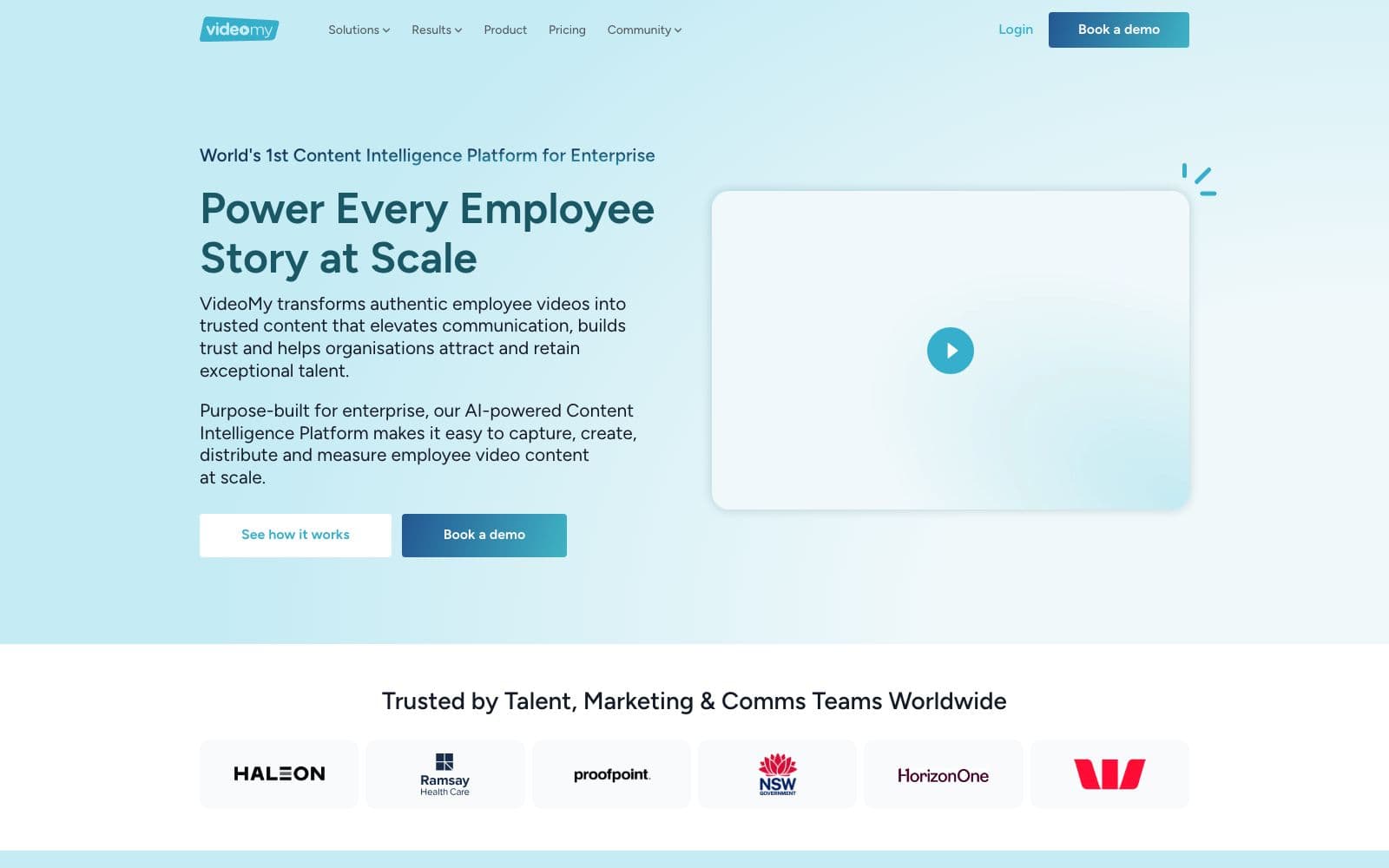
VideoMy is an enterprise employee-generated-content platform, built in Melbourne in 2015 as VideoMyJob. A recruiter or comms lead sends a one-tap filming request; the employee records on any device with an AI-written script and a teleprompter to lean on; the platform auto-edits the clip, applies the company's logo, colours and templates, and spins off derivatives (quote cards, social posts, blog posts, thumbnails) into an embeddable Story Feed. It is a capture and publishing workflow for employee voices, sold to enterprise TA, employer brand, early careers and internal comms teams, with SOC2 compliance, ISO 27001 certification, SAML-based SSO and subtitle translation into 100+ languages. Their TA page quotes Compass Group reporting four times the conversions when a VideoMy video sits on top of a job ad (their customer's figure, on their site).
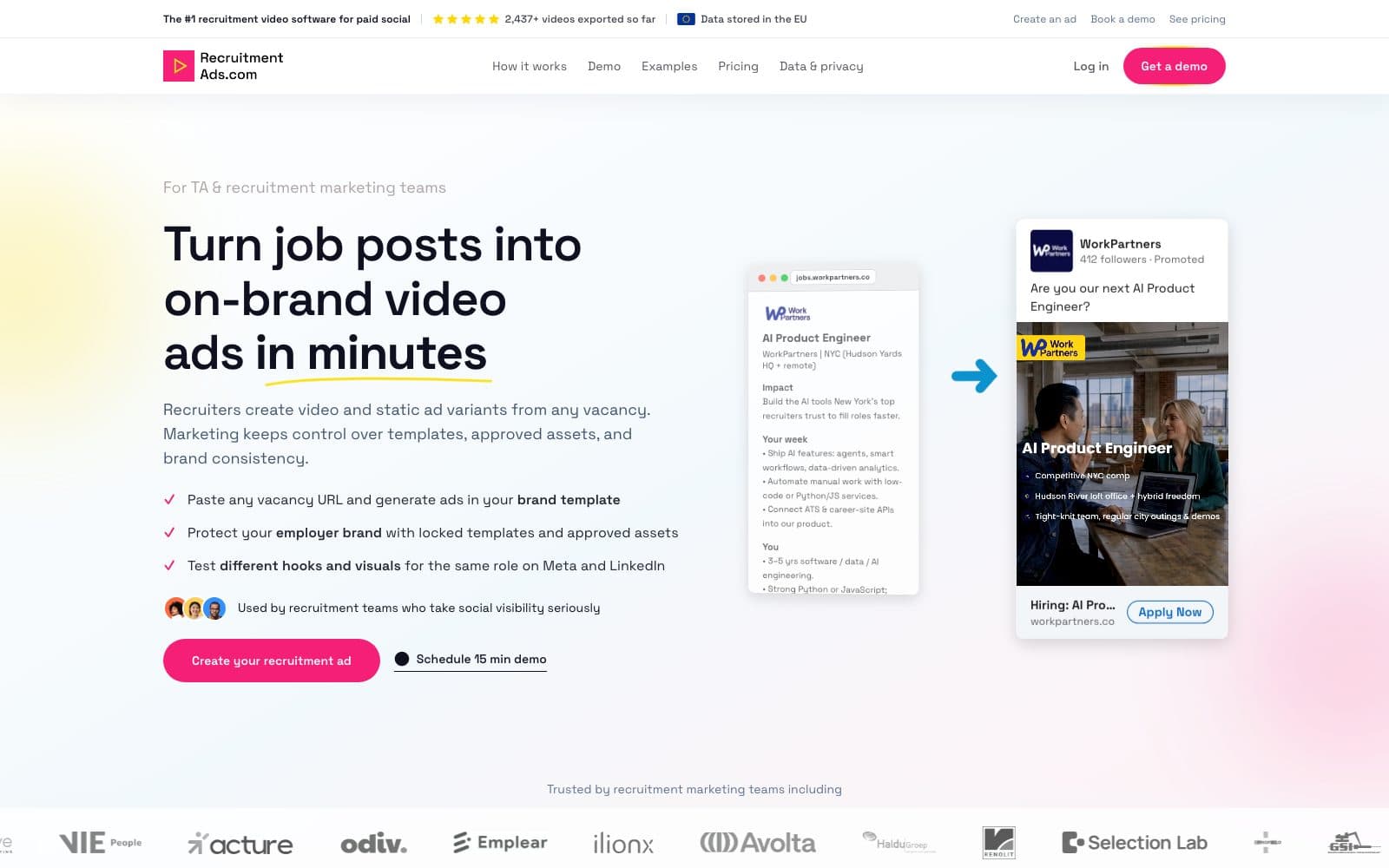
RecruitmentAds.com turns a vacancy into ad creative. Paste the job URL or the job text; it pulls the title, requirements, perks and apply path into your locked template, writes the script and AI voice-over, and exports 9:16, 4:5, 1:1 and landscape video plus static variants for Meta and LinkedIn, with several versions per role when you want to test hooks. You choose the visual source per template: AI-generated scenes from the job description, real employee photos placed in on-brand layouts, or approved assets only with no AI people at all. It hands you files; it does not buy media, post on your behalf, or interview candidates. Plans, credits and the 90-day pilot are published in EUR, GBP and USD.
When VideoMy is the right call, and when RecruitmentAds is
Easier to evaluate upfront, and that is the practical difference on day one: RecruitmentAds publishes its plan prices and a 90-day pilot on live vacancies, and will build a sample from your job link. VideoMy quotes its Pilot and Enterprise tiers on a call, and the Enterprise tier carries a 12-month commitment plus an account setup fee (videomy.co/pricing, checked 5 August 2026).
When VideoMyJob wins
You need a lot of employees on camera and the filming itself is the hard part.
VideoMy's one-tap filming requests, AI script writer, teleprompter, positioning guides, unlimited retakes and "Film Only" contacts for hiring managers and employee advocates exist for exactly that. RecruitmentAds has no filming workflow: it never asks an employee to record anything.
Your programme is an employee-story content engine rather than a paid-social campaign: careers-site embeds via the Story Feed, internal comms, employee amplification through personal networks, plus derivative blogs, quote cards, social posts and thumbnails from each recording.
VideoMy is built to feed those organic surfaces from one place.
Procurement requires certifications RecruitmentAds does not hold.
VideoMy's pages list SOC2 compliance, ISO 27001, SAML SSO and permissions controls, AWS servers in Australia, the US and Europe, dedicated Customer Success Management on Enterprise, an 8-week onboarding programme covered by the setup fee, and additional teams that separate activity by business unit, region or child company. RecruitmentAds publishes EU-hosted storage, a subprocessor list and a standard Article 28 DPA, not those certifications.
When RecruitmentAds wins
Your unit of work is the vacancy, not the story.
One job URL becomes script, visuals, voice-over and every export size in your locked template, so a requisition that opens today can have ad creative today, with no employee's calendar involved.
You need paid-social ad creative, not just posts.
RecruitmentAds exports video and static variants sized for Meta and LinkedIn from the same job post, so you can run video-versus-image and hook-versus-hook tests on one role.
You want your real employees on screen and your brand locked at the same time.
Marketing decides per template whether recruiters may use AI-generated visuals, approved employee photos, or approved assets only, so "no synthetic people" is a setting you switch on, not a product you have to buy instead.
Who should pick what
Sole recruiter
VideoMy is built for enterprise programmes with a managed launch and a 12-month Enterprise commitment, which is heavy for one recruiter; RecruitmentAds' published Starter plan and 90-day pilot let a single recruiter ship creative per vacancy without a rollout project.
TA team
Both fit here, for different bottlenecks: choose VideoMy when the constraint is getting employees on camera consistently, and RecruitmentAds when the constraint is having ad creative ready for every requisition the week it opens.
Employer-branding-led buyer
VideoMy gives you an employee-story library with brand rules applied automatically and a careers-site Story Feed; RecruitmentAds gives you locked templates plus control over whether recruiters may use AI visuals, employee photos, or approved assets only. Many teams run both, one for stories and one for per-vacancy ads.
Ready to evaluate VideoMyJob vs RecruitmentAds on your own vacancy? Try it in a 90-day pilot, or request a sample with your job link.
What most comparisons miss
Almost every page ranking for "VideoMyJob alternatives" is describing a product that has changed name and shape. VideoMyJob is now VideoMy: videomyjob.com redirects to videomy.co, and the positioning moved from making video job ads to enterprise employee-generated content. The directory pages that own the SERP (Capterra at #1, TrustRadius at #3, G2 and SoftwareSuggest below them, checked 5 August 2026) still summarise the old "create, edit and share video job ads" product, and the Google Play listing still carries the VideoMyJob name. So do parts of VideoMy's own site: the pricing page's ownership FAQ still refers to closing your account "with VideoMyJob", and the 192-post blog still lives on the old domain at blog.videomyjob.com. None of that is a knock on VideoMy: rebrands take time to propagate. It does mean that if you shortlisted VideoMyJob to turn job ads into video, you should check the current product against that job before you book the demo, and that the comparison worth making is capture workflow versus vacancy-to-ad output.
Switching
What changes
- The unit of work. In VideoMy a project is a story someone films; in RecruitmentAds a project is a vacancy you paste in.
- Who spends time. VideoMy asks employees to record, and new accounts run an 8-week onboarding programme with team training and configuration; RecruitmentAds asks a recruiter for a job link.
- Where the assets end up. VideoMy publishes to careers sites, social channels, its Story Feed and internal comms; RecruitmentAds gives you MP4s and statics that you upload to Meta or LinkedIn yourself.
What maps to what
- Brand kit to locked template: the logo, colours, fonts and styling VideoMy applies automatically become your RecruitmentAds template, set up once by whoever owns brand.
- Employee footage to employee photos: RecruitmentAds' employee-photo mode takes approved stills and places real people in on-brand layouts, so the faces stay; the recording sessions do not.
- Subtitle translation to export languages: instead of translating captions on a finished film, you pick the language at export and the on-screen text and AI voice-over are generated in it.
- Story Feed embeds to file embeds: RecruitmentAds exports files you can embed on a vacancy page or careers site; there is no hosted feed component to replace it like-for-like.
What you keep
- Your channels. Meta, LinkedIn, YouTube and your careers site stay exactly as they are; only the file source changes.
- Your ATS workflow. RecruitmentAds has no native ATS integration to configure; it reads the public job page, so nothing in your ATS needs to move.
- Your VideoMy library. Their own pricing FAQ says all videos created are yours to keep, including from pilots and trials, and can be exported and retained even if you close the account, so switching does not mean losing the employee stories you have already made (videomy.co/pricing, checked 5 August 2026).
Evaluate RecruitmentAds on your own vacancy
The fastest way to settle a comparison like this is to stop reading about output and look at it. Bring a live job link to a 15-minute demo and we build creative from that vacancy on the call: AI visuals, your employees' photos, or approved assets only, in your template, in the export sizes Meta and LinkedIn ask for. Prices and the 90-day pilot are on the pricing page, so you can check the commercials before you talk to anyone.
Questions buyers actually ask
Is VideoMyJob still available, or is it VideoMy now?
It is VideoMy. videomyjob.com redirects to videomy.co, the company behind it is VideoMy Pty Ltd, and the product is now positioned as enterprise employee-generated content rather than video job ads. The old name still lingers in places (app store listings, most software directories, and the original 192-post blog at blog.videomyjob.com), which is why searches for "VideoMyJob alternatives" still return descriptions of the earlier product (checked 5 August 2026).
How much does VideoMy cost?
VideoMy does not publish prices. Its pricing page describes two packages (a fully managed Pilot, and an Enterprise package for unlimited employee stories), and every package except the Pilot requires a 12-month commitment, payable upfront or monthly, with a setup fee on new accounts covering an initial 8-week onboarding programme. The numbers come from sales (checked 5 August 2026). RecruitmentAds takes the opposite approach: plan prices, credit allowances and the 90-day pilot fee are on the pricing page in EUR, GBP and USD, so you can size the commitment before a call. Neither tool has a free tier: the low-commitment routes are VideoMy's Pilot package and RecruitmentAds' 90-day pilot.
What is the real difference between VideoMy and RecruitmentAds?
What goes in and what comes out. VideoMy starts with an employee recording and ends with branded employee stories plus derivatives (quote cards, social posts, blog posts) published to careers sites, social channels and internal comms. RecruitmentAds starts with a vacancy URL and ends with finished video and static ad creative in the sizes Meta and LinkedIn ask for. Neither buys media for you. If your gap is "we have no footage of our people", VideoMy fills it; if your gap is "every open role needs ad creative this week", RecruitmentAds does.
Can RecruitmentAds use our real employees, or is everything AI-generated?
Your real employees, if that is what your brand requires. RecruitmentAds has three visual modes: AI-generated scenes built from the job description, approved employee photos placed in on-brand layouts, or approved assets only, meaning logos, brand colours, and stock or clips you have already signed off, with no AI people at all. Marketing can disable modes per template, so recruiters only get the ones you allow. Follow your existing consent process for employee photography, exactly as you would for any other channel.
Could we run both tools?
Yes, and some teams should, because these tools solve different problems. VideoMy builds a library of employee stories for your careers site, employer-brand content and internal comms; RecruitmentAds turns each live vacancy into ad creative for the feed. The honest test is whether your bottleneck this quarter is employee footage or per-vacancy output; that decides which one you buy first, and whether the second is worth a line in next year's budget.
How we compared these tools
Everything about VideoMy on this page comes from its own live pages (videomy.co product, pricing, homepage and talent-acquisition pages) checked on 5 August 2026, plus clearly labelled secondhand sources for company and review data. Everything about RecruitmentAds comes from our own published product, pricing and security pages. We have not run a paid VideoMy trial, so we do not describe how its editor feels to use or what it costs; where a number is not published, this page says so instead of estimating. What to check when you evaluate either tool: what you must supply before the first asset exists, what file formats come out, whether the finished file carries the vendor's own branding, who is allowed to change the brand elements, what the term and exit look like, and whether your own vacancy or your own footage was used in the demo you were shown.