
Job video SEO is not about uploading an MP4 and hoping for applause
Recruitment video can help a vacancy perform better across search, YouTube, employer pages, paid campaigns, and AI-assisted discovery. But the video file is not the magic. The structure around the video is what gives search systems something useful to read.
A vacancy video works hardest when it becomes a complete content asset: a clear script, crawlable transcript, captions, YouTube metadata, a useful thumbnail, an embedded job-page version, and schema that describes both the role and the video where appropriate.
That distinction matters. A video on a job page does not automatically improve Google rankings, GEO performance, AI Overviews visibility, or applications. Search systems still need accessible text, page quality, internal linking, metadata, structured data, and a vacancy that deserves to be found. The robot needs receipts.
What Google actually says about AI search visibility
AI search still starts with normal search fundamentals
Google's guidance for generative AI features says the basics of SEO still apply because AI features in Search are rooted in Google's core Search ranking and quality systems. Google also warns against treating GEO or AEO as a separate trick box. In Google's framing, optimizing for generative AI search is still optimizing for Search. Source: Google Search Central: optimizing for generative AI features.
For recruitment marketers, the practical lesson is simple: do not make the video carry the whole vacancy on its back. Put the important facts in crawlable HTML too. The job title, company, location, salary range, contract type, requirements, benefits, and apply path should be readable on the page, not trapped inside pixels and audio.
Video needs a page, metadata, and structured context
Google's video SEO documentation explains that video visibility depends on discovery, stable URLs, accessible thumbnails, supported formats, page context, and structured data. For embedded third-party video, including YouTube, Google may index both the host page and the platform page if the pages meet its criteria. Source: Google Search Central: video SEO best practices.
VideoObject schema can describe a video with fields such as name, description, thumbnail URL, upload date, duration, embed URL, content URL where available, and clips or key moments where relevant. Source: Google Search Central: video structured data.
For a vacancy page, that means the video should reinforce the same facts as the job post. The job page, transcript, YouTube title, YouTube description, captions, thumbnail, and schema should all point in the same direction. If the page says one thing and the video says another, that is not optimization. That is confetti.
Where YouTube fits in job video SEO
YouTube is distribution, not a ranking button
YouTube is useful because it creates a second searchable surface for the vacancy. A well-packaged YouTube upload can appear in YouTube search, Google video surfaces, embedded job pages, paid campaigns, retargeting flows, and sometimes AI-assisted answers.
That does not mean every vacancy video will be cited by an AI system. It does not mean YouTube automatically improves the job page. The defensible claim is narrower and stronger: YouTube gives a job video a structured, crawlable, highly understood video surface inside the wider Google ecosystem.
What citation datasets suggest
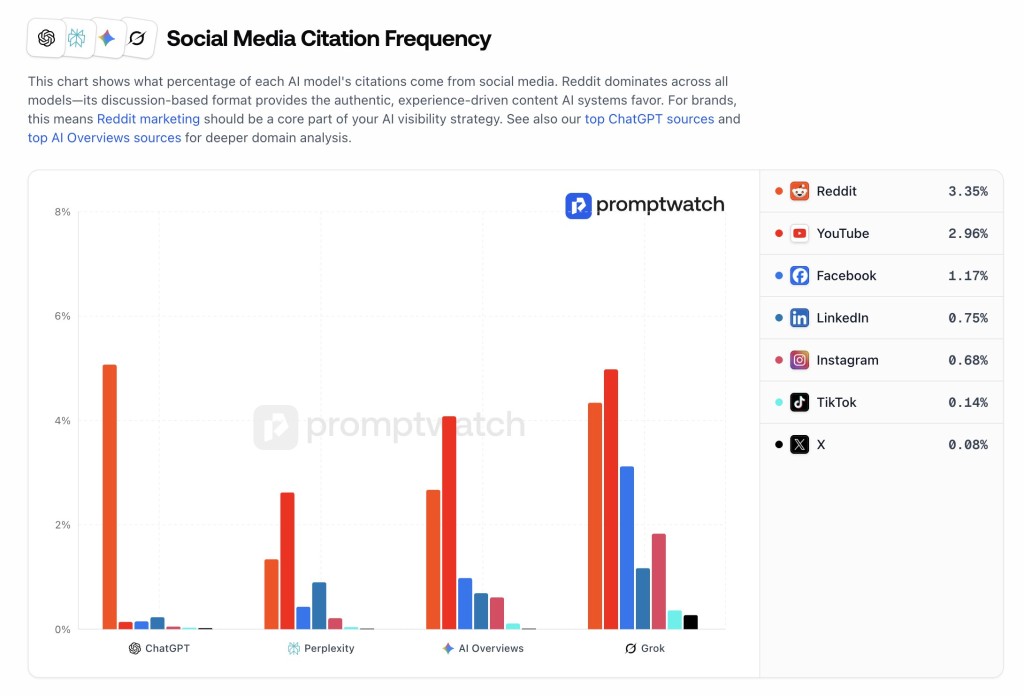
Promptwatch publishes live data on how often major AI interfaces cite social platforms. Its public page compares social citations across AI search interfaces and states that Reddit dominates overall, while YouTube is one of the recurring social and video sources. Source: Promptwatch: social media citation frequency.
OtterlyAI's 2026 study analyzed more than 100 million AI citation instances across six AI search platforms. In a subset of roughly 5.5 million social media citations, YouTube accounted for 31.8%. OtterlyAI also reports that long-form videos made up 94% of cited YouTube videos, while Shorts made up 5.7%. Sources: OtterlyAI YouTube AI citation study and GlobeNewswire summary.
The sensible takeaway for recruitment is this: if AI citation and Google visibility are goals, a normal YouTube upload with a clear title, description, transcript, captions, and chapters is a better foundation than a Shorts-only approach. Shorts can still help reach and awareness, but they should not be the whole plan.
The vacancy video package that actually makes sense
Turn one job ad into a structured content asset
The win is not "make a video." The win is turning a vacancy into a reusable asset that search engines, AI systems, recruiters, hiring managers, and candidates can all understand.
A strong job video package should include:
- A recruitment video based on the actual vacancy, not generic employer-brand filler
- A script that mentions the exact role, employer, location, working model, salary range where available, and apply path
- A YouTube title that includes the job title, employer, and location
- A YouTube description with a clear summary, apply link, role facts, and relevant links
- Captions or an SRT file
- A full transcript published in crawlable HTML where appropriate
- A thumbnail that makes the role recognizable at a glance
- An embedded version of the video on the vacancy page
- A short job-page summary that repeats the key facts in plain text
JobPostingschema for the vacancy when the page is a real job postingVideoObjectschema for the video when the page includes a qualifying video- Measurement through Google Search Console, YouTube Analytics, website analytics, and campaign reporting
Several GEO and video vendors describe a similar pattern around transcripts, metadata, chapters, and schema. Those sources are useful for understanding market consensus, but they should not be treated as independent proof that any one vacancy will rank or be cited. See Seenos, Goldcast, and TwentyThree.
What the video should say
The best job videos are specific. Candidates do not need a fog machine. They need to know whether the job is worth their time.
Include these facts in the spoken script, on-screen text where useful, and transcript:
- Exact job title
- Employer, recruiter, or agency name
- Location, hybrid model, remote option, or travel expectations
- Hours, contract type, and seniority level
- Salary range or pay band where available
- Main responsibilities
- Required skills, certificates, or experience
- Benefits and practical reasons to apply
- Hiring process or next step
- Clear apply path
This helps candidates decide faster. It also turns the transcript into a useful search asset instead of a pile of polished but empty sentences.
How employers should use structured job video
Use it first on priority vacancies
Employers should start with roles where better explanation can change candidate behavior: hard-to-fill jobs, competitive locations, roles with misunderstood responsibilities, and vacancies where the employer has a strong story but a plain job ad does not show it.
The video should sit on the vacancy page, support paid and organic distribution, and give recruiters a useful asset for outreach. The same core content can then work across YouTube, the careers site, remarketing, social ads, email, and hiring manager updates.
Make the role easier to understand before the click
Structured job video is not only an SEO play. It is a candidate-comprehension play. If a candidate understands the role, location, expectations, and benefits before applying, traffic quality can improve even when raw traffic does not explode.
How agencies and recruiters should use it
Package the vacancy like a campaign
For recruitment agencies, structured video is strongest as a repeatable vacancy marketing package. That package can include the video, YouTube upload, captions, transcript, embedded job-page content, schema checks, paid distribution, and performance reporting.
That is a better commercial story than "we made a nice video." It gives clients a clearer deliverable and gives recruiters more material to use in outreach, retargeting, shortlist conversations, and reporting.
Do not promise AI citations for every job
The promise should be practical: more structured evidence around the role, better reusable content, stronger candidate explanation, and more surfaces where the vacancy can be discovered. AI citation is a possible upside, not the invoice line.
How to measure whether it works
Measure across surfaces, not one ranking
The wrong test is: "Did this one job page rank higher after we embedded a video?" That can be part of the analysis, but it is too narrow and too easy to misread.
Use a broader measurement framework:
- Google Search Console impressions and clicks for vacancy and careers pages
- Video indexing and rich result eligibility where applicable
- YouTube impressions, search traffic, watch time, retention, and clicks to the job page
- Apply clicks and application starts from pages with embedded video
- Conversion rate from paid campaigns using video versus static creative
- Brand and employer-name searches over time
- AI mention or citation monitoring for employer, role, and location prompts
Use English prompt sets for monitoring
Useful prompt categories include:
- "[Company] jobs"
- "[Company] careers"
- "[Job title] jobs in [city]"
- "What is it like to work at [Company]?"
- "Best employers for [role/category] in [location]"
- "Recruitment agencies for [role/category] in [location]"
Where possible, compare priority vacancies with structured video against similar vacancies without it. The goal is not to pretend the video caused every movement. The goal is to see whether the full asset package improves visibility, engagement, and conversion.
What not to claim
Recruitment teams should avoid claims that sprint past the evidence. Do not say:
- "Video on a job page boosts AI rankings."
- "Every recruitment video improves GEO."
- "YouTube guarantees AI citations."
- "Embedding a video is enough."
- "Shorts are the best format for AI citation."
- "AI search visibility can be separated from page quality, indexing, and structured content."
A stronger and safer claim is:
RecruitmentAds helps turn vacancies into structured video assets with YouTube distribution, transcripts, captions, metadata, schema support, and job-page embedding, giving candidates and search systems clearer evidence about the role and employer.
Conclusion
Job video is useful for SEO and AI search visibility when it behaves like structured evidence, not decorative media. The video should explain the role. The transcript should make that explanation crawlable. The YouTube upload should create a searchable video surface. The job page should connect the video to the vacancy. The schema should describe what is really on the page.
That is the grown-up version of recruitment video for GEO: no ranking fairy dust, no citation guarantees, no mystery meat metadata. Just a better vacancy asset that helps candidates understand the job and gives search systems more to work with.
Do not sell job video as a shortcut. Sell it as a structured vacancy content workflow for search, YouTube, AI-assisted discovery, and candidate conversion.
References
- Google Search Central: Optimizing your website for generative AI features on Google Search
- Google Search Central: AI features and your website
- Google Search Central: Video structured data
- Google Search Central: Video SEO best practices
- Promptwatch: Social media citation frequency by AI model
- OtterlyAI: YouTube AI Citation Study 2026
- GlobeNewswire: OtterlyAI YouTube citation study summary
- Seenos: Video content for GEO
- Goldcast: Video GEO
- TwentyThree: Video SEO and GEO